
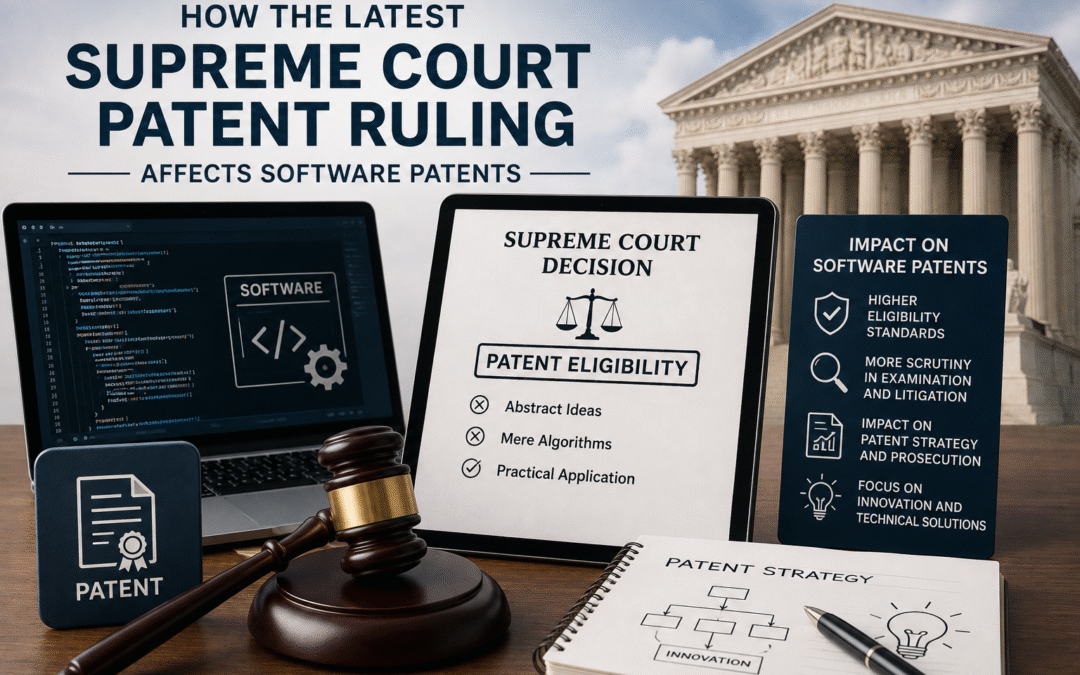
The landscape of intellectual property law in the United States is constantly evolving, particularly regarding software. When the Supreme Court issues a new patent ruling, it often sends ripples through the technology sector, forcing companies to re-evaluate how they protect their digital assets. Understanding these shifts is essential for anyone involved in software development or investment.
The Evolution of Software Patentability
For years, the core challenge in software patent law has been the distinction between patentable inventions and abstract ideas. The Supreme Court has historically struggled to define the boundary where a software process becomes a tangible invention rather than a mathematical concept. These rulings often dictate whether a specific algorithm or process can be legally protected under federal law.
Why Recent Rulings Matter
A Supreme Court patent ruling typically sets a precedent that lower courts and the United States Patent and Trademark Office (USPTO) must follow. When the Court clarifies the standards for patent eligibility, it directly influences whether your patent application will be granted or rejected. For businesses, this means the difference between securing a competitive advantage and losing the rights to a core product feature.
Key Considerations for Software Developers
If you are developing software, you must remain aware of how current case law affects your ability to secure protection. Not every line of code is patentable, and the courts are increasingly skeptical of software that merely automates a traditional business practice.
- Focus on technical solutions to technical problems.
- Document the specific improvements your software makes to computer functionality.
- Avoid claiming abstract processes that could be performed by a human without a computer.
For further insights into how changing legal standards affect digital assets, you might explore our analysis on trademark rights in the digital space. Understanding these broader trends helps in building a cohesive IP strategy.
Navigating the USPTO Guidelines
The USPTO often updates its examination guidelines in response to Supreme Court decisions. These guidelines provide the practical framework for patent examiners. Staying updated on these internal changes is as important as following the high-level court rulings themselves. If you are uncertain about your current portfolio, it is wise to visit our homepage to review our latest resources on intellectual property management.
Practical Guidance for IP Protection
To navigate this complex environment, consider the following steps:
- Conduct a thorough patentability search before filing.
- Emphasize the technical architecture of your software in your patent claims.
- Consult with a qualified legal professional to assess the strength of your claims against current standards.
Conclusion
Staying informed about the latest Supreme Court patent ruling is a critical component of modern business strategy. While the legal environment for software patents remains challenging, those who focus on clear, technical innovation are better positioned to secure their rights. Always ensure your approach to intellectual property is proactive and aligned with the most recent judicial interpretations. If you have questions regarding your specific situation, seek professional guidance to protect your innovations effectively.
Frequently Asked Questions
Are all software patents invalid?
No. Software that provides a concrete, technical improvement to a computer or a process remains eligible for patent protection.
How does a Supreme Court ruling affect existing patents?
A ruling can change how existing patents are interpreted during litigation or re-examination, potentially impacting their enforceability.
Should I file for a patent or rely on trade secrets?
This depends on your business model. Patents offer public protection but require disclosure, while trade secrets provide indefinite protection without disclosure but are harder to enforce if the secret is independently discovered.