
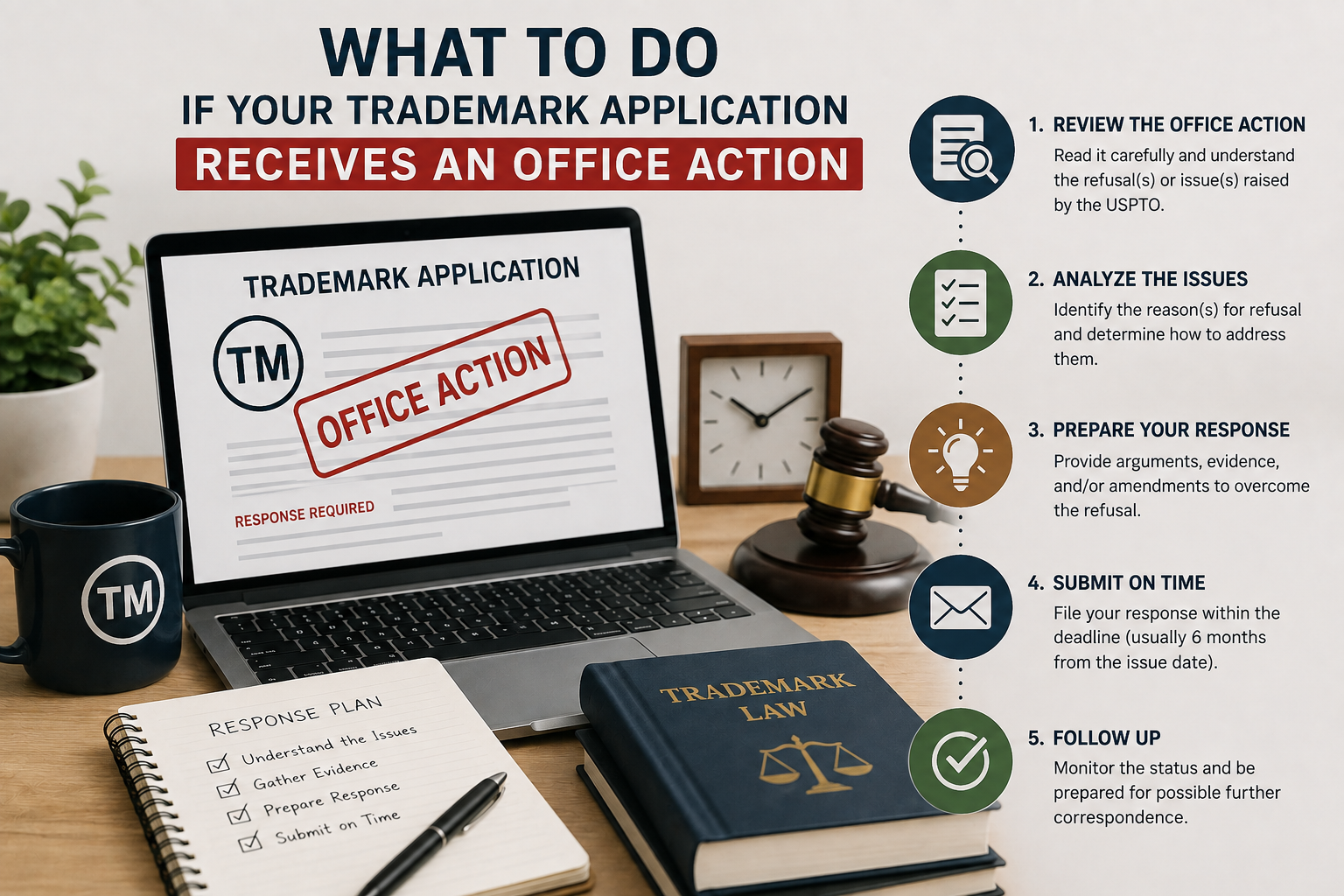
Receiving an official notification from the United States Patent and Trademark Office (USPTO) can feel like a setback, but it is a common step in the federal registration process. If you are currently responding to trademark office action requirements, understanding how to address the examining attorney’s concerns is vital for the survival of your application.
What Is a Trademark Office Action?
An office action is a formal letter issued by a USPTO examining attorney. It details why your application cannot proceed to registration in its current form. These notices are not necessarily a denial; rather, they are requests for additional information or corrections to ensure your mark meets legal standards. Whether you are dealing with procedural issues or substantive refusals, your response must be timely and accurate.
Common Types of Office Actions
Office actions generally fall into two categories: procedural and substantive. Procedural issues might include a request for a clearer description of your goods or services, or a correction to your specimen. Substantive refusals, such as a ‘likelihood of confusion’ with an existing mark, are more complex and often require a detailed legal argument.
Steps to Take When You Receive an Office Action
First, do not panic. Read the document carefully to identify the specific deadline. Missing a deadline will result in the abandonment of your application. Once you understand the issues, evaluate whether you can comply with the request or if you need to provide a legal rebuttal.
- Review the examining attorney’s specific objections.
- Gather necessary evidence or documentation to support your position.
- Determine if an amendment to your application is appropriate.
- Consult with a legal professional if the refusal involves complex trademark law.
For those navigating the complexities of digital assets, it is worth noting that evolving areas of law, such as how NFTs interact with trademark rights, continue to shape how the USPTO views modern branding.
The Importance of Professional Guidance
While applicants can represent themselves, trademark law is highly technical. A poorly drafted response can lead to a final refusal, making it difficult to revive your application. When responding to trademark office action, a professional can help you structure your arguments to align with current USPTO guidelines and case law precedents.
Frequently Asked Questions
Can I request an extension to respond?
In many cases, you can request an extension of time, but you must do so before the original deadline expires. Some types of office actions may have limited extension options.
What happens if I ignore the office action?
If you fail to respond by the deadline, the USPTO will issue a notice of abandonment, and your application will be closed. You would then need to start the entire process over and pay new filing fees.
Should I hire an attorney?
While not required, having legal counsel is highly recommended, especially if you face substantive refusals or complex legal arguments that require citations to existing trademark statutes.
Conclusion
An office action is a hurdle, not necessarily a dead end. By carefully reviewing the requirements and preparing a thorough, timely response, you can keep your application moving forward. For more resources on protecting your intellectual property, visit our home page to explore our services and latest insights.
Disclaimer: This content is for informational purposes only and does not constitute legal advice. Please consult with a qualified trademark attorney regarding your specific situation.