
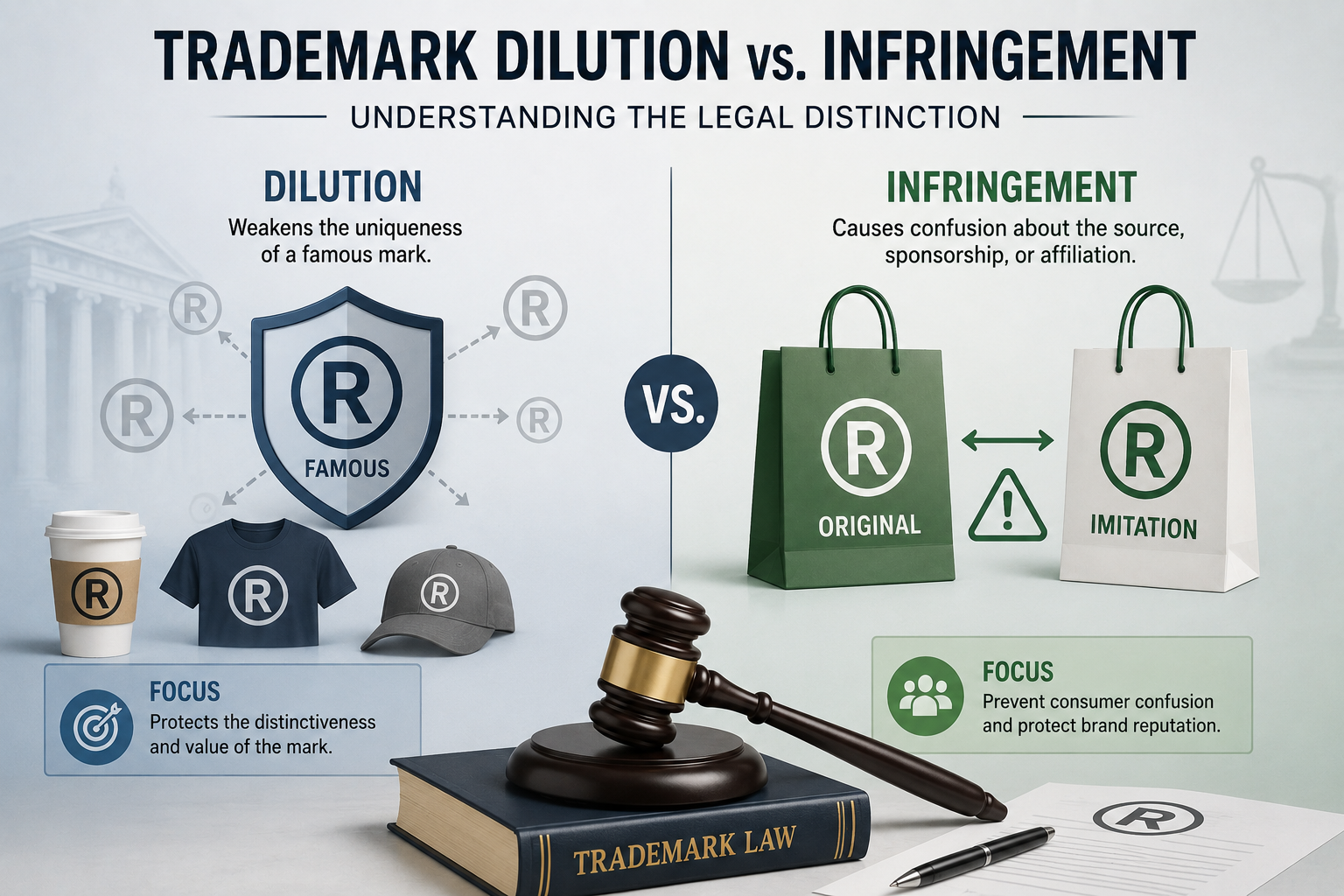
When managing a brand, understanding the distinction between trademark dilution vs infringement is essential for effective intellectual property protection. While both concepts fall under the umbrella of trademark law, they serve different purposes and apply in unique legal scenarios. Protecting your brand identity requires knowing when a competitor is merely confusing consumers versus when they are eroding the strength of your mark.
What is Trademark Infringement?
Trademark infringement is the most common legal claim in brand protection. It occurs when a party uses a mark that is likely to cause confusion, mistake, or deception among consumers regarding the source of goods or services. The core inquiry centers on the likelihood of confusion.
The Likelihood of Confusion Standard
Courts evaluate infringement by looking at factors such as the similarity of the marks, the relatedness of the goods, the strength of the senior mark, and the intent of the defendant. If a consumer might mistakenly believe that the defendant’s product is affiliated with or endorsed by the owner of the senior mark, infringement has likely occurred.
What is Trademark Dilution?
Trademark dilution is a more specialized claim that protects only famous, distinctive marks. Unlike infringement, dilution does not require a showing of consumer confusion. Instead, it focuses on the harm done to the brand’s reputation or distinctiveness.
Types of Dilution
- Blurring: This occurs when the power of a mark is weakened by the use of a similar mark on unrelated goods, causing the original mark to lose its unique association with a single source.
- Tarnishment: This happens when a mark is used in a context that is unwholesome or disparaging, potentially harming the reputation of the famous mark.
Key Differences at a Glance
The primary difference between these two legal concepts lies in the threshold for protection and the nature of the harm. While infringement protects the consumer from confusion, dilution protects the brand owner from the erosion of their mark’s value.
| Feature | Trademark Infringement | Trademark Dilution |
|---|---|---|
| Core Requirement | Likelihood of Confusion | Famous and Distinctive Mark |
| Scope of Protection | Any valid trademark | Only famous marks |
| Harm Prevented | Consumer deception | Loss of brand uniqueness |
Protecting Your Intellectual Property
As digital landscapes evolve, staying informed on the latest developments is crucial. Whether you are dealing with traditional commerce or navigating newer spaces like the digital asset market—as discussed in our guide on whether NFTs can violate trademark rights—proactive monitoring is key. If you are unsure about your specific legal standing, consult with a qualified legal professional to assess your options.
Frequently Asked Questions
Do I need a famous mark to sue for infringement?
No. Infringement claims can be brought for any valid, registered or common law trademark, provided there is a likelihood of confusion.
Can I sue for both dilution and infringement?
Yes. In many cases, brand owners will plead both claims if the facts support them, though the evidentiary requirements for each will differ significantly.
Conclusion
Distinguishing between trademark dilution vs infringement is a fundamental aspect of maintaining a strong brand. While infringement focuses on the immediate risk of consumer confusion, dilution acts as a shield for the long-term equity of famous brands. By understanding these legal frameworks, you can better protect your company’s assets and reputation in an increasingly competitive environment. For more information on protecting your brand, visit our home page to explore our resources.